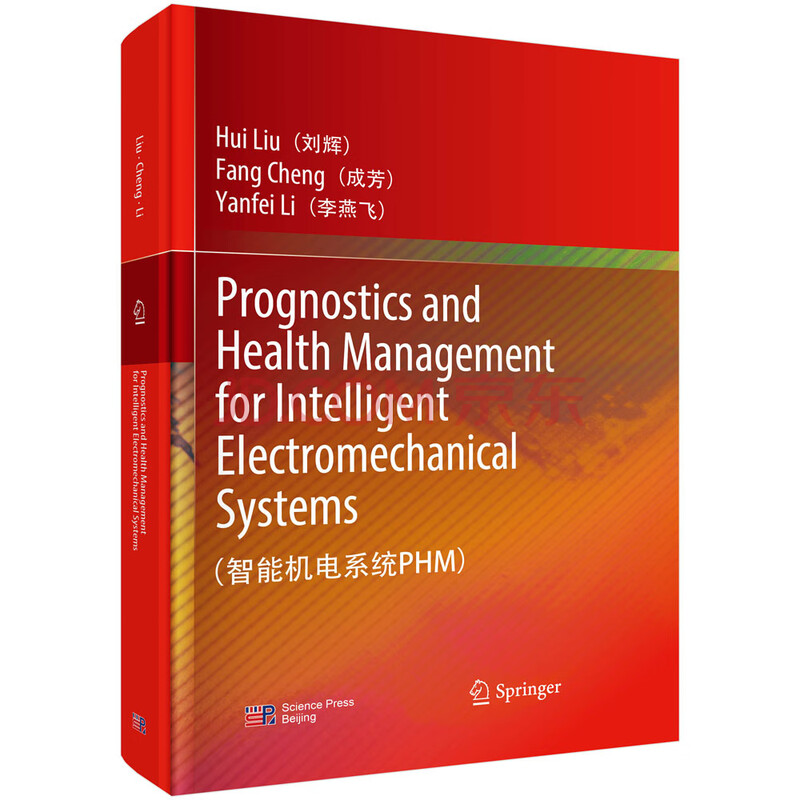
内容简介
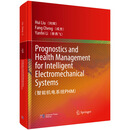
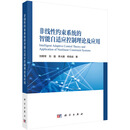
机电系统是大部分电气机械设备的基本功能基础,机电系统的故障诊断与健康管理(PHM)对整个机械设备的安全运行具有至关重要的意义。《Prognostics and Health Management for Intelligent Electromechanical Systems(智能机电系统PHM)》结合大数据技术在机电系统PHM中的应用,全面介绍了智能机电系统PHM的相关理论、关键技术和应用实例。《Prognostics and Health Management for Intelligent Electromechanical Systems(智能机电系统PHM)》分为三篇12章,**篇从机电系统PHM重要性进行分析,介绍了智能机电系统及其研究现状和方法,并介绍智能机电系统PHM嵌入大数据的必要性;第二篇以轴承为例介绍机械系统的PHM大数据方法,包括:第2章介绍轴承振动信号的特征提取方法,第3章介绍轴承剩余寿命的集成智能预测方法,第4章介绍轴承故障集成智能诊断方法,第5章介绍轴承剩余寿命的深度预测方法,第6章介绍轴承故障深度诊断方法,第7章介绍将机械系统PHM大数据嵌入方法;第三篇介绍电气系统的PHM大数据方法,包括:第8章介绍IGBT的剩余寿命优化预测方法,第9章介绍MOSFET剩余寿命分解预测方法,第10章介绍电容剩余寿命的误差修正预测方法,第11章介绍电源剩余寿命的滤波修正预测方法,第12章以电源为例介绍电气系统PHM大数据嵌入方法。 各章内容都具有实例分析,帮助读者深入理解相关内容,激发灵感。
精彩书摘
Chapter 1 Introduction
Driven by the Industrial Revolution 4.0, intelligent electromechanical systems (IES) have become indispensable in modern industry and technology. The cross-domain coupling inherent in intelligent mechatronic systems makes it challenging to account for all interactions between components from different domains fully. Consequently, as system functions increase and structures become more complex, the potential failure modes also rise, placing higher demands on maintenance strategies.
The health status of IES is closely linked to their safe and reliable operation. Traditional preventive maintenance strategies have generally evolved through four stages: reactive maintenance, preventive maintenance, production-based maintenance, and condition-based maintenance. Traditional maintenance is primarily preventive, where maintenance is scheduled regardless of whether a fault has occurred, or reactive, where post-fault diagnostics and repairs are performed. Both preventive and reactive maintenance have unavoidable drawbacks. Recently, the introduction of Prognostics and Health Management (PHM) systems offers technical support to address these challenges, shifting from traditional fault diagnosis techniques to predictive technologies based on intelligent systems [20, 25]. PHM techniques start by gathering sensor data from machinery, then employ a range of intelligent reasoning models to evaluate the equipment’s current health condition. These methods aim to anticipate potential failures and estimate the equipment’s remaining useful life (RUL) by analyzing degradation patterns and additional data. This process supports informed decision-making and the planning of maintenance tasks. This book focuses on PHM for IES, with the comprehensive framework presented in Fig. 1.1.
1.1 Overview of Intelligent Electromechanical System
IES represent a sophisticated integration of mechanical components, electronics, and computational intelligence, designed to enhance the functionality and efficiency of diverse applications. These systems play a pivotal role in enabling PHM by providing critical real-time data and computational analysis [18]. The deployment of sensors and advanced diagnostics within IES facilitates the early detection of system anomalies and potential failures, which are essential for implementing effective PHM strategies [9]. Consequently, PHM leverages this data to enhance the reliability, maintenance efficiency, and safety of IES, ensuring timely interventions and reducing downtime through predictive analytics. IES are widely used across various fields, including transportation, robots, and energy, where their ability to intelligently respond and adapt to variables is crucial, as shown in Fig. 1.2. This book focuses on the application of IES in high-speed trains, robotics, and new energy vehicles, which serve as quintessential examples of IES.
1.1.1 High-Speed Trains
In the past decade, the complexity, integration, and intelligence of high-speed rail equipment have significantly increased. The traditional maintenance model, which is based on scheduled interventions, can no longer meet the evolving demands of maintenance and management [7]. Ongoing technological advancements have introduced a significant challenge: effectively evaluating the health status of rail transit equipment by gathering, processing, and analyzing condition data, and making accurate, timely predictions about potential equipment failures. This issue has become a pressing problem that requires urgent attention.
As a critical component of the mechanical systems in train bogies, bearings play a vital role in supporting and transferring loads [29]. Bearings in train bogies must endure high rotational speeds and substantial loads while maintaining both precision and reliability. To meet these demands, advanced materials and innov
目录
Contents
1 Introduction 1
1.1 Overview of Intelligent Electromechanical System 2
1.1.1 High-Speed Trains 2
1.1.2 Robots 4
1.1.3 New Energy Vehicles 5
1.2 Research Status of Prognostics and Health Management in Intelligent Electromechanical System 6
1.2.1 Fault Diagnosis 7
1.2.2 Remaining Useful Life Prediction 8
1.3 Methodology of Prognostics and Health Management in Intelligent Electromechanical System 10
1.3.1 Feature Extraction Method 10
1.3.2 Prediction Model 11
1.3.3 Error Modification Model 13
1.4 The Necessity of Big Data Embedding in Prognostics and Health Management for Intelligent Electromechanical Systems 14
1.5 Scope of the Book 16
References 18
2 Feature Extraction of Bearing Vibration Signal 25
2.1 Introduction 25
2.2 Data Acquisition 26
2.3 Frequency Domain Feature Extraction 28
2.3.1 The Theoretical Basis of Continuous Wavelet Transform 28
2.3.2 Feature Extraction 31
2.3.3 Feature Evaluation 33
2.4 Decomposition-Based Feature Extraction 35
2.4.1 The Theoretical Basis of Variational Modal Decomposition 35
2.4.2 Feature Extraction 36
2.4.3 Feature Evaluation 38
2.5 Deep Learning Feature Extraction 40
2.5.1 The Theoretical Basis of Convolutional Neural Network 40
2.5.2 Feature Extraction 41
2.5.3 Feature Evaluation 43
References 45
3 Ensemble Intelligent Diagnosis for Bearing Faults 49
3.1 Introduction 49
3.2 Data Acquisition 50
3.3 Ensemble Diagnostic Model Based on Multi-objective Grey Wolf Optimizer for Bearing Faults 50
3.3.1 The Theoretical Basis of Empirical Wavelet Transform 50
3.3.2 The Theoretical Basis of Random Tree 53
3.3.3 The Theoretical Basis of Multi-objective Grey Wolf Optimizer 54
3.3.4 Experimental Result and Analysis 55
3.4 Boosting Ensemble Diagnostic Model for Bearing Faults 60
3.4.1 The Theoretical Basis of Empirical Mode Decomposition 60
3.4.2 The Theoretical Basis of Boosting 60
3.4.3 The Theoretical Basis of the Osprey-Cauchy-Sparrow Search Algorithm 63
3.4.4 Experimental Result and Analysis 65
3.5 Model Performance Comparison 69
3.6 Conclusions 70
References 71
4 Deep Learning Prediction for Bearing Remaining Useful Life 73
4.1 Introduction 73
4.2 Data Acquisition 74
4.3 BiLSTM-Based Predictive Model for Bearing Remaining Useful Life 77
4.3.1 The Theoretical Basis Convolutional Neural Network 77
4.3.2 The Theoretical Basis Bidirectional Long Short-Term Memory 79
4.3.3 Experimental Result and Analysis 80
4.4 GRU-Based Predictive Model for Bearing Remaining Useful Life 82
4.4.1 The Theoretical Basis Gate Recurrent Unit 82
4.4.2 The Theoretical Basis Attention 83
Contents v
4.4.3 Experimental Result and Analysis 84
4.5 Model Performance Comparison 86
4.6 Conclusions 87
References 89
5 Optimization Based Prediction for IGBT Remaining Useful Life 91
5.1 Introduction 91
5.2 Data Acquisition 92
5.3 Predictive Model for IGBT Remaining Useful Life Based on Particle Swarm Optimization 92
5.3.1 Health Indicator Based on Particle Swarm Optimization 92
5.3.2 RUL Prediction Based on the Similarity 95
5.4 Predictive Model for IGBT Remaining Useful Life Based on Bat Optimization 96
5.5 Model Performance Comparison 97
5.6 Application in Front-Wheel Steering Mobile Robot Fault-Tolerant Control 99
5.6.1 Front-Wheel Steering Mobile Robot System 99
5.6.2 Control Design 101
5.6.3 Simulation Results 103
5.7 Conclusions 109
References 110
6 Decomposition Based Prediction for MOSFET Remaining Useful Life 113
6.1 Introduction 113
6.2 Data Acquisition 114
6.3 Pred
试读
Chapter 1 Introduction
Driven by the Industrial Revolution 4.0, intelligent electromechanical systems (IES) have become indispensable in modern industry and technology. The cross-domain coupling inherent in intelligent mechatronic systems makes it challenging to account for all interactions between components from different domains fully. Consequently, as system functions increase and structures become more complex, the potential failure modes also rise, placing higher demands on maintenance strategies.
The health status of IES is closely linked to their safe and reliable operation. Traditional preventive maintenance strategies have generally evolved through four stages: reactive maintenance, preventive maintenance, production-based maintenance, and condition-based maintenance. Traditional maintenance is primarily preventive, where maintenance is scheduled regardless of whether a fault has occurred, or reactive, where post-fault diagnostics and repairs are performed. Both preventive and reactive maintenance have unavoidable drawbacks. Recently, the introduction of Prognostics and Health Management (PHM) systems offers technical support to address these challenges, shifting from traditional fault diagnosis techniques to predictive technologies based on intelligent systems [20, 25]. PHM techniques start by gathering sensor data from machinery, then employ a range of intelligent reasoning models to evaluate the equipment’s current health condition. These methods aim to anticipate potential failures and estimate the equipment’s remaining useful life (RUL) by analyzing degradation patterns and additional data. This process supports informed decision-making and the planning of maintenance tasks. This book focuses on PHM for IES, with the comprehensive framework presented in Fig. 1.1.
1.1 Overview of Intelligent Electromechanical System
IES represent a sophisticated integration of mechanical components, electronics, and computational intelligence, designed to enhance the functionality and efficiency of diverse applications. These systems play a pivotal role in enabling PHM by providing critical real-time data and computational analysis [18]. The deployment of sensors and advanced diagnostics within IES facilitates the early detection of system anomalies and potential failures, which are essential for implementing effective PHM strategies [9]. Consequently, PHM leverages this data to enhance the reliability, maintenance efficiency, and safety of IES, ensuring timely interventions and reducing downtime through predictive analytics. IES are widely used across various fields, including transportation, robots, and energy, where their ability to intelligently respond and adapt to variables is crucial, as shown in Fig. 1.2. This book focuses on the application of IES in high-speed trains, robotics, and new energy vehicles, which serve as quintessential examples of IES.
1.1.1 High-Speed Trains
In the past decade, the complexity, integration, and intelligence of high-speed rail equipment have significantly increased. The traditional maintenance model, which is based on scheduled interventions, can no longer meet the evolving demands of maintenance and management [7]. Ongoing technological advancements have introduced a significant challenge: effectively evaluating the health status of rail transit equipment by gathering, processing, and analyzing condition data, and making accurate, timely predictions about potential equipment failures. This issue has become a pressing problem that requires urgent attention.
As a critical component of the mechanical systems in train bogies, bearings play a vital role in supporting and transferring loads [29]. Bearings in train bogies must endure high rotational speeds and substantial loads while maintaining both precision and reliability. To meet these demands, advanced materials and innov