内容简介
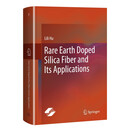
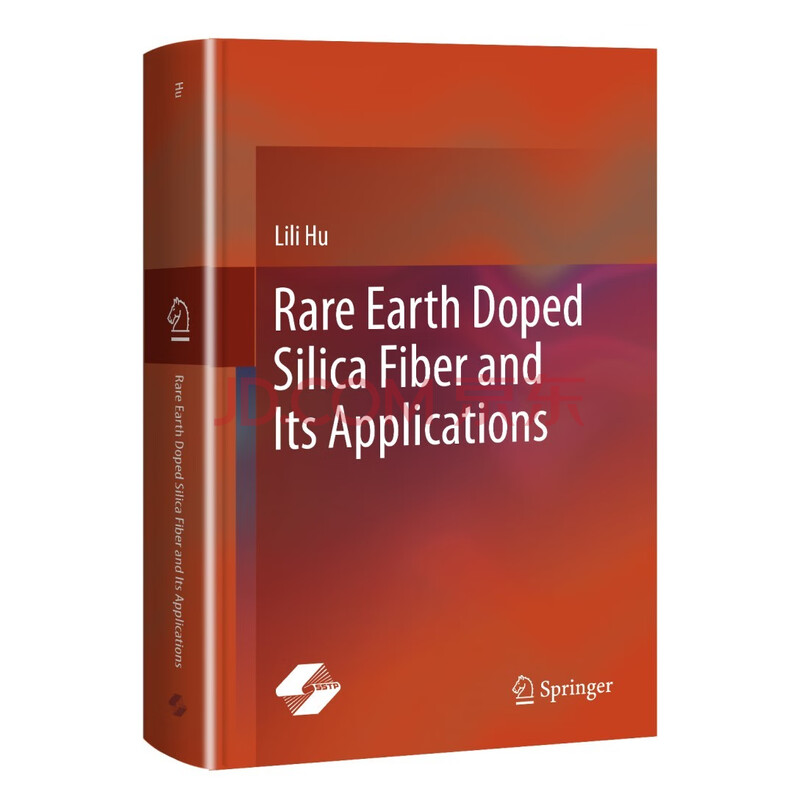
本书以中国科学院上海光学精密机械研究所胡丽丽研究员团队多年来的研究积累和相关创新成果为素材,对其进行梳理总结,内容涉及稀土掺杂石英玻璃及光纤的发展历史、成分、结构、性质、制备工艺及其应用等。全书综合国内外同行的研究报告,把稀土掺杂石英玻璃及光纤的最新研究成果全面、系统地介绍给读者。全书共计9章,第1章系统介绍石英玻璃的结构和性质;第2章阐述掺镱石英玻璃的性质和结构,解析镱离子局域结构与镱离子光谱性质的关联性;第3章阐述稀土掺杂石英光纤的制备方法和性能表征方法;第4、第5章分别介绍掺镱包层结构和大模场微结构光纤的特点及应用;第6、第7章分别介绍1.5μm波段掺铒石英光纤以及2μm波段掺铥、钬石英光纤的最新研究进展及应用;第8章介绍掺钕石英光纤的研究进展,着重阐述最新的0.9μm波段的激光应用进展;第9章面向空间环境光纤激光器的应用需求,阐述耐辐照稀土掺杂石英光纤的制备及应用技术进展。
本书为原中文版输出到Springer的英文版国内同步面世版本。
前言/序言
Since E.Snitzer first proposed the concept of fiber lasers in 1961,fiber lasers havegone through the initial research stage,the development of erbium-doped fiberamplifiers in the 1980s,and the beginning of optical communication applications,tothe rapid development and widespread application of ytterbium-doped fiber laserssince the late 1990s.Fiber lasers,with their compact structure,high wall-plug effi-ciency,high beam quality,high reliability,easy operation and maintenance,and lessenvironmental impact,have been widely used in advanced manufacturing,commu-nication,measurement sensing,medical,defense,and scientific research fields.
Rare earth-doped silica fiber is the key component of fiber lasers and amplifiers.With the development of fiber lasers and amplifiers,the laser wavelength of rareearth-doped silica fiber has expanded from the initial 1 μm to the current visiblelight to 2μm,the single-fiber output power has developed from the initial milliwattlevel to the current single-mode kilowatt level,and the fiber structure has transi-tioned from the initial single cladding to double cladding,triple cladding,andmicrostructured fiber.Its fabrication technology has also developed rapidly.
As is well known,since the Corning Company in the United States first obtainedlow-loss silica fiber with a loss of 20 dB/km using modified chemical vapordeposition(MCVD)technology in 1970,the University of Southampton in the UKsuccessfully developed low-loss neodymium-doped and erbium-doped silica fiberusing MCVD technology in 1985,which opened the application of erbium-dopedfiber amplifiers in the field of optical communication.In 1988,E.Snitzer firstproposed a double-clad neodymium-doped silica fiber structure,making it possiblefor a significant increase in the brightness and power of fiber lasers.In 1999,the international community first achieved a breakthrough in the output powerof hundreds of watts from an ytterbium-doped silica fiber laser.In the followingdecade,with the development of laser diodes,ytterbium-doped silica fiber lasersachieved single-fiber single-mode kilowatt laser output.In 2000,the Universityof Bath in the UK first reported the research results of ytterbium-doped photoniccrystal fibers.In 2003,the University of Jena in Germany first used large-mode-area ytterbium-doped photonic crystal fibers to achieve high average power laseroutput,providing a solution of active fibers for high peak power pulsed fiber lasers. The continuous research and development of rare earth-doped silica fibers notonly promoted the application of fiber lasers and amplifiers in the fields of opticalcommunication and measurement sensing but also greatly advanced the applicationof high-power fiber lasers represented by ytterbium-doped fiber lasers in the fieldsof industrial processing,medical treatment,and defense.At present,rare earth-doped silica fiber has become an indispensable gain material for communicationfiber amplifiers,high-power lasers,and industrial fiber lasers.
So far,Chinese monographs containing professional knowledge content of rareearth-doped silica fiber mainly include:New Type of Optically Functional Glass,edited by Jiang Zhonghong(Chemical Industry Press,2008),High Power FiberLasers and Their Applications,written by Lou Qihong (University of Science andTechnology of China Press,2009),Industrial Fiber Lasers,written by Yan Dapeng(Huazhong University of Science and Technology Press,2022),and Special OpticalFibers and Optical Fiber Communication,written by Wang Tingyun(ShanghaiScientific and Technical Publishers,2016).These four monographs focus on opticallyfunctional glass,high-power fiber lasers,industrial fiber lasers,and special opticalfibers for communication,respectively.In addition,Composite Glass Fibers writtenby Yang Zhongmin and others(South China University of Technology Press,2021)specifically introduces new types of fibers composed of multi-component glassesand composites of nanocrystals,cryst